Builders
 Carpenters
 Electricians
 Flooring Specialists
 Gardeners
 Handymen
 Heating Engineers
 Painters & Decorators
 Plasterers & Renderers
 Plumbers
 Roofers
 Tilers
 my
myPower Shower Installation Cost
At a Glance
- The average cost to install a new power shower is around £550.
- Installation usually takes 1 to 2 days, while a like-for-like replacement takes around 2 to 3 hours.
- A full breakdown of power shower installation and replacement costs in the UK in 2026.
- A power shower fitting cost calculator and the factors that affect your quote.
- How to use MyJobQuote to find and hire a plumber to install or replace a power shower.
Get free estimates
Are you a trade? Get more work today!
Want to know how much it costs to install a power shower in the UK?
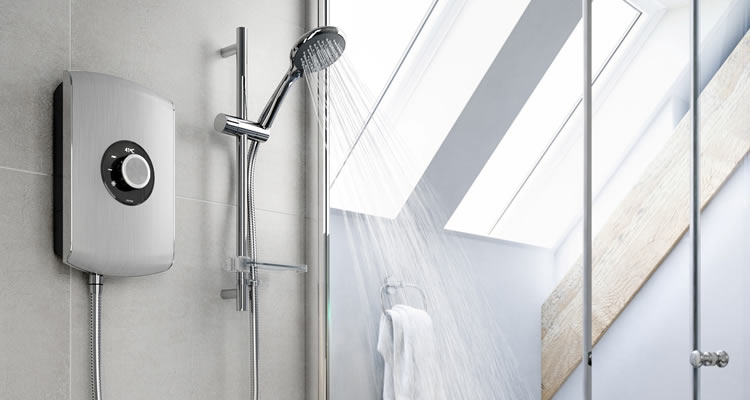
A new power shower installation costs around £550 on average, including the shower unit and labour. A like-for-like replacement is typically around £325.
A power shower is not the same as an electric shower. It mixes stored hot and cold water and uses an integral pump to boost the flow, so it is normally suited to a gravity-fed system with a hot water cylinder and cold water tank.
Your final price will depend on the shower model, existing pipework, installation position, electrical work, local labour rates, and any extra bathroom work. This guide covers power shower prices in 2026, timescales, running costs and how to hire an installer.
Need a quote for your job?
We have a range of local plumbers who are ready to give you a free quote for installing a power shower.
Want to find out more first?
Keep reading below to find out more about shower installation costs.
£550
Table of Contents
- How Much to Install a Power Shower?
- Labour Cost to Install a Power Shower in the UK
- How Much Does a New Power Shower Cost?
- Additional Power Shower Installation Costs
- What Impacts Power Shower Installation Costs?
- What's Involved in Installing a Power Shower?
- Power Shower Alternatives
- Power Shower vs Electric Shower
- How Much Electricity Do Power Showers Use?
- Benefits of Installing a Power Shower
- Maintenance Tips for a Power Shower
- Hiring a Shower Installer Checklist
- FAQs
How Much to Install a Power Shower?
People sometimes get confused between power showers and electric showers. A power shower uses a pump to increase the flow of stored hot and cold water and includes a thermostat to control the temperature. An electric shower heats cold mains water as it passes through the unit and does not use the same hot-water supply.
A brand-new power shower installation costs around £550 on average, including labour and a standard shower unit. This type of job usually takes 1 to 2 days, particularly where new pipework or electrical work is needed.
Replacing an existing power shower costs around £325 and normally takes 2 to 3 hours when the suitable pipework, wiring and installation position can be reused.
For comparison, installing an electric shower costs around £350 and generally takes 3 to 5 hours. This guide focuses on power showers rather than electric showers.
What to do if water in my power shower is not draining?
"Sounds like the trap is blocked. Take the waste cap off, twist and pull the sediment tray out and clean."
Power Shower Installation Prices
| Job description | Average cost (supply and fit) | Timescale |
|---|---|---|
| Installing a new power shower | £550 | 1 to 2 days |
| Replacing an existing power shower | £325 | 2 to 3 hours |
| Installing an electric shower alternative | £350 | 3 to 5 hours |
Want a custom price?
Post your job
Labour Cost to Install a Power Shower in the UK
A plumber usually charges around £40 to £60 per hour to fit a power shower. For a more extensive job, they may charge a day rate of around £150 to £270 per day.
A straightforward replacement normally takes 2 to 3 hours. A new installation usually takes 1 to 2 days, particularly if pipework must be rerouted or the shower is fitted in a different position.
Do I need an electrician and a plumber to have an electric shower fitted?
"You will always need a registered competent electrician to install an electric shower, as electrical work in a bathroom is notifiable under part P. Some electricians can do the plumbing side of things but most will have a plumber buddy who they can rely on.
There will also be plenty of companies large and small that employ both plumbers and electricians who can do jobs together."
There will also be plenty of companies large and small that employ both plumbers and electricians who can do jobs together."
Labour rates vary across the UK. Prices in London can be around £30 to £70 higher than in the North of the UK, and difficult access or extra plumbing and electrical work can increase the quote.
Power Shower Installation Cost Calculator
How Much Does a New Power Shower Cost?
A standard power shower unit generally costs around £120 to £300 before installation.
Premium power showers can cost around £300 to £600. The upper end is normally for models with a higher flow rate, more powerful pumps, thermostatic controls, multiple spray settings, or upgraded finishes.
What power shower feature do you consider most important?
Adjustable water pressure
0 votes - 0%0% of votes
Digital thermostat controls
0 votes - 0%0% of votes
Energy efficient/eco-friendly
1 votes - 100%100% of votes
Additional functions (multi-jet, massage setting etc)
0 votes - 0%0% of votes

1 votes
See results
Hide results
The power depends on the number of litres of water flow per minute. The average power shower uses around 14 litres of water flow per minute. However, more powerful models can have a maximum water flow per minute of around 18 – 20.
Additional Power Shower Installation Costs
There are some additional costs that you may need to consider when installing a power shower.
Below is a list of costs that you may need to be aware of before deciding to install your power shower.
- Electrical upgrades — Allow around £315 where electrical work is needed for the new unit.
- Shower retiling — Retiling the shower area costs around £250 to £400. Fully tiling a medium-sized bathroom costs around £450 to £700.
- Bathroom extractor fan — Allow around £250 to £300 if ventilation also needs upgrading.
- Removing the existing shower — If removal is not included in the replacement quote, a labourer may charge around £14 to £20 per hour. The work usually takes 1 to 2 hours.
- Steam shower — A steam shower is an alternative rather than a normal extra. It turns water into vapour and may appeal if relaxation features are a priority.
Ask a Trade
Got a question that only a tradesperson can answer? We have thousands of trades ready to answer any question you may have.
Ask your question

What Impacts Power Shower Installation Costs?
There are a number of factors that can affect the cost of having your new power shower installed. Below is a list of some of the main cost factors that you should be aware of when choosing to have a new power shower installed in your home.
Shower Model and Flow Rate
Standard units usually cost £120 to £300. Premium models with stronger pumps, higher flow rates, thermostatic controls, extra spray settings, or upgraded finishes can cost £300 to £600.
Location of Property
Labour rates vary across the UK. Homeowners in London can pay around £30 to £70 more for labour than homeowners in the North of the UK. The calculator applies regional adjustments of 25% for London, 20% for the South East or South West, and 10% for the Midlands.
Pipework, Wiring and Installation Position
Moving the shower or rerouting services increases labour and material costs. The calculator allows £200 for basic pipework rerouting and £450 for completely relocating pipes. Electrical upgrades are treated as an additional cost rather than part of this factor.
Hot-Water System Compatibility
A power shower normally needs a gravity-fed system with a hot water cylinder and cold water tank. It is generally unsuitable for a combi boiler because there is no stored hot-water supply for the integral pump. Checking compatibility before choosing a unit can avoid unnecessary work or buying the wrong type of shower.
If you need a new boiler system, this can add around £800 to £2,000 onto shower installation prices. It'll also mean that this job would take around 1 to 2 days longer to complete.
What's Involved in Installing a Power Shower?
A professional will check that the shower is compatible with the hot-water system, install the plumbing and electrical connections, and test the finished unit. A new installation normally takes 1 to 2 days.
Before the Job
- The installer checks the hot water cylinder, cold water tank, available pressure, and proposed shower position.
- They isolate the electrical and water supplies, scan the wall for hidden cables and pipework, and mark the fixing and service points.
During the Job
- The installer fits the shower unit and rail, runs or adapts the 15mm pipework, and installs the required valves and electrical connection.
- Where necessary, they reroute pipework or prepare channels in the wall while keeping cables and pipes in safe recognised zones.
After the Job
- The pipework is flushed and checked for leaks before the water and power supplies are restored.
- The installer tests the pump, flow and thermostatic controls, then explains safe operation and maintenance.
For more detail on the process, see our guide on how to install a new shower.
Power Shower Alternatives
There are a number of different alternative showers available if you are looking for something other than a power shower. Below is a list of the other shower options available that you may want to consider over a power shower, along with their main advantages and disadvantages.
Electric Shower Cost
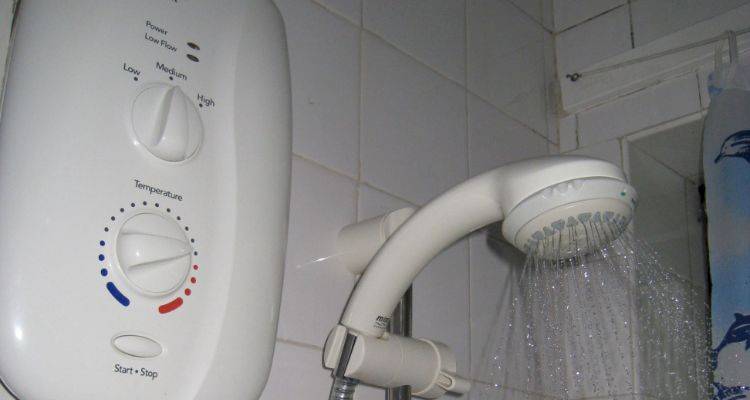
An electric shower is one of the most versatile types of shower on the market and a popular choice in the UK.
These types of showers are ideal if you want to be able to have an instantly hot shower. They also offer great benefits, such as savings on your energy bill in comparison to more powerful models like a power shower.
An electric shower heats water through an electrical element. Instead of taking hot water from a tank or boiler system, they instead require cold water and instantly heat the water up with an in-built heating element. They mix hot water and cold water to reach your desired temperature.
Electric showers cost, on average, around £80 to £350 in the UK.
Pros
- ✔ You don't need a hot water supply to use it, so you don't need to worry about running out of hot water.
- ✔ You can save energy and money on your energy bills.
- ✔ They offer a low flow rate so you could save on your water bill as well.
- ✔ Work great with combi boilers.
- ✔ You don't have to wait for the hot water to come on to have a shower.
- ✔ Even if your boiler fails, you can still have a hot shower.
Cons
- ✖ They rely on your existing water pressure so the pressure may be low.
- ✖ The shower won't work in the event of a power cut.
Mixer Shower Cost
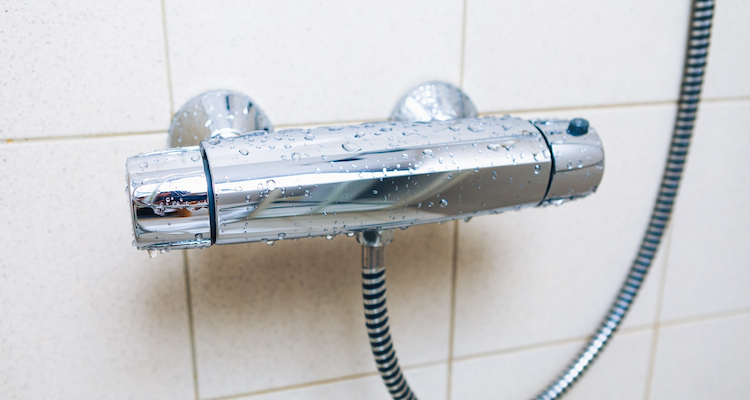
A mixer shower uses an existing source of hot water. It mixes your hot and cold water together. It doesn't usually require a source of electricity to run, instead working mechanically to mix the water sources.
Mixer showers usually cost on average around £50 to £350.
Pros
- ✔ Mixer showers can be more powerful than other shower models.
- ✔ You can save money on your electricity bill by switching to a mixer shower.
Cons
- ✖ Could end up using up all of the hot water easily.
- ✖ If your boiler fails, the mixer shower won't provide hot water.
- ✖ Could have low pressure as the pressure depends on your household water pressure.
Digital Shower Cost
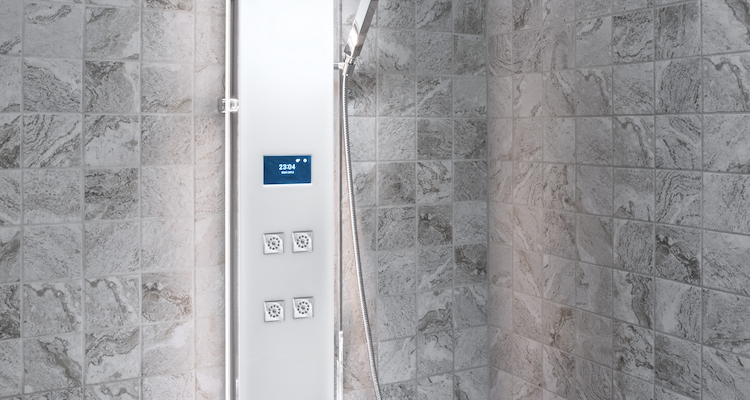
Digital showers are a much more modern model of shower. They are great for people who love to have all the latest technology in their home.
The main difference between a digital shower and other models is that they can offer extremely precise temperature controls, and these can be set at the touch of a button.
Digital showers feature a control panel that displays information such as the temperature and flow rate. This means that you can accurately change the temperature by the degree. You can even set up different profiles for each person in your family.
You can even link your shower up to your phone or smart devices so you can turn your shower on or change the controls using voice commands.
Digital showers usually cost on average around £200 to £500.
Pros
- ✔ Features the latest technologies.
- ✔ Change temperature specifically by the degree.
- ✔ Use voice commands to control your shower.
- ✔ Control your water pressure with the control panel.
Cons
- ✖ Could be confusing if you are not highly technical.
- ✖ More expensive price range.
Power Shower vs Electric Shower
While we've compared the pros and cons of alternative options above, it can still be somewhat confusing when understanding the difference between installing a power shower and fitting an electric shower.
As such, we've summarised both below for a direct comparison.
Power Shower
Choose a power shower to recreate a luxurious spa experience, especially if you have a gravity-fed water system.
- Uses a pump to increase water pressure.
- Connects directly to your home's water system.
- Requires a hot water cylinder and cold water tank.
- Uses more energy and water due to high flow rate.
- Suitable for low water pressure and a gravity-fed system.
Electric Shower
Choose an electric shower if you're looking for a quick installation with hot-water on demand.
- Connects only to a cold water supply.
- Heats water using an internal heating element.
- Can work independently to your hot water system.
- Ideal for hot water on demand.
- Best suited to homes with a combi boiler.
How Much Electricity Do Power Showers Use?
A power shower uses electricity for its pump, while the hot water is heated separately by the home's boiler or hot-water system. This is why its direct electrical demand is much lower than an electric shower, although its higher flow rate can increase water and water-heating use.
| Comparison | Power shower | Electric shower |
|---|---|---|
| Typical electrical demand | 200 to 500W for the pump | 7 to 10.5kW to heat water |
| How water is heated | By the boiler or stored hot-water system | Inside the shower unit |
| Effect on bills | Direct pump electricity is usually minimal, but water and water-heating use also matter | Higher direct electricity use, with a lower flow rate in many models |
The pump's direct electricity use is less than many household appliances and may cost only pennies per shower. The total running cost still depends on the flow rate, shower length, energy tariff, and how efficiently the stored hot water is heated.
Benefits of Installing a Power Shower
There are many benefits to having a power shower installed in your home. Below is a list of some of the main benefits of installing a power shower in your bathroom.
Increased Flow Rate
A power shower offers an increased flow rate which means that you can have a much more powerful shower. This allows for a much more enjoyable showering experience.
Convenient
The power shower is very convenient as you can get a super great clean in a fast amount of time. The great water pressure on a power shower allows for an amazing showering experience.
Quick and Easy to Install
A power shower is very quick and easy to install, and you can be in your new power shower within a few hours. This is perfect for when you have a broken shower and need a new replacement fast.
Ideal for Low-Pressure
In the event your home suffers with low-water pressure, such as in an upstairs bathroom, installing a power shower is an ideal solution. With a built-in pump, the design allows for consistent water-flow for a comfortable performance.
Health Benefits
Installing a power shower provides a consistent temperature, which is easier to control, making it gentler on the hair and skin. Taking a shower can aid relaxation, with high-pressure water providing therapeutic benefits that can help lower blood pressure.
Ecological Shower Heads
Fitting an ecological shower head to your power shower is a cost-effective way to reduce water usage and make your showering more environmentally friendly.
Maintenance Tips for a Power Shower
The expected lifespan of a power shower can be 8 to 15 years. However, with the correct maintenance this can be much longer making your investment a reliable choice.
Follow some of the following tips to ensure longevity to your new power shower:
- Clean Regularly — Avoid a buildup of limescale by using a descaler or soaking in white wine vinegar.
- Internal Descaling — In areas of hard-water, it's recommended to descale the individual components.
- Avoid Overuse — While daily showers are acceptable, being in constant use can put strain on the pump and motor.
- Don't Leave it Turned On — As well as the running water, some power showers also come with a separate power switch.
- Schedule Annual Check-ups — With regular checks by a qualified tradesman any issues can be pre-empted in advance.
Ultimately, if you look after your power shower, you can expect it to outlast its anticipated lifespan and run smoothly for years to come.
Why has my shower pump stopped working?
"If there’s no sound at all when you turn the shower on, don’t assume it’s the pump straight away – it’s often something simple like the power supply. Check the fused spur or plug, any pull cord or wall switch, and see if anything has tripped on the consumer unit. If power is reaching the pump and it is still completely dead, the pump or its internal electrics may have failed."
Hiring a Shower Installer Checklist
There are a few things you will need to consider before hiring someone to install a new power shower for you.
Below is a list of some of the main things that you should consider when looking for the right contractor for the job:
- Experience – Check that the installer has recent experience fitting power showers and understands gravity-fed hot-water systems.
- Qualifications – Confirm who will complete any electrical work and whether the person is suitably qualified for bathroom electrical work.
- What's Included – Ask for an itemised written quote covering the shower unit, labour, pipework, wiring, removal, waste, and making good.
- Compatibility – Check whether the proposed shower is compatible with your hot water cylinder, cold water tank and available pressure.
- Guarantees – Ask what workmanship and manufacturer guarantees apply, and check suitable insurance and recent customer reviews.
- Compare Quotes – Compare at least three quotes through MyJobQuote and confirm the expected start date and timescale before hiring.
Want to find a local shower installer?
Get 3 FREE quotes for a shower installation or replacement from plumbers near you.
FAQs
How Does a Power Shower Work?
A power shower works by taking water from both the hot and cold water supplies, and it mixes the hot and cold water together to reach your desired showering temperature. Power showers produce a more impressive powerful spray due to an internal pump that boosts the water flow rate. Power showers are perfect for homes that have a good amount of hot water supply.
How Much Water Does a Power Shower Use?
The majority of power showers tend to use around 14 to 18 litres of water per minute.
Does an Electric Shower Cost Less to Run Than a Power Shower?
A power shower uses a relatively low-powered electric pump, while its hot water is heated separately by the home's boiler or hot-water system. An electric shower uses much more electricity directly because it heats cold mains water inside the unit.
Which costs less overall depends on the shower's flow rate, how long it runs, the household's electricity and fuel tariffs, and how efficiently the stored hot water is heated. A power shower can cost more to run because its higher flow rate may use more hot water, even though the pump itself uses less electricity.
What Features Should I Look Out for in a Power Shower?
A thermostatic power shower can help you to ensure that your shower remains at a steady temperature even if someone else in the house turns a tap on or flushes the toilet.
Power showers that don't have this feature can turn scalding hot and then freezing cold as the shower can struggle to adjust to the changes in water flow due to the change in water demands from other users in the home.
Can I Install a Power Shower Myself?
Installing a power shower is not recommended as a DIY job. It involves both plumbing and electrical work in a bathroom, and the unit must be compatible with the hot-water system and installed safely.
Hire an experienced shower installer and use a suitably qualified electrician for any electrical work. A professional can check the water storage, pressure, pipework, wiring, and manufacturer requirements before testing the completed installation.
What Capacity of Hot and Cold Water Do I Need to Have Stored to Use a Power Shower?
It is recommended that you have a minimum hot water storage capacity of 100 litres and a minimum cold water storage capacity of 230 litres. This will allow for a sensible amount of shower time.
If you have lower volumes of water storage, this will result in shorter showering times.