Builders
 Carpenters
 Electricians
 Flooring Specialists
 Gardeners
 Handymen
 Heating Engineers
 Painters & Decorators
 Plasterers & Renderers
 Plumbers
 Roofers
 Tilers
 my
myBay Window Replacement Cost
At a Glance
- The average cost of a new bay window is £2,000.
- It takes around 3 days to install a bay window.
- A breakdown of pricing information for different types of bay window.
- How long the job will take and a general overview of what the job entails.
- How to find a local bay window installer using MyJobQuote.
Get free estimates
Are you a trade? Get more work today!
Replacing a bay window typically costs between £1,220 and £2,950, with most homeowners paying around £2,000 for a standard uPVC installation. The exact price depends on the size of the window, the number of panels, and the material used.
This guide covers bay window replacement costs by type and material, what affects the final price, and what the installation process involves.

£2,000
Table of Contents
- How Much Does a New Bay Window Cost?
- Supply Cost of Bay Windows
- Additional Bay Window Replacement Costs
- Labour Cost of Bay Window Replacement
- Factors That Impact Bay Window Replacement Costs
- What's Involved in Replacing a Bay Window?
- Building Regulations and Planning Permission for Bay Window Replacements
- Choosing a Bay Window
- Bay Window Materials
- Benefits of Replacing a Bay Window
- Bay Window Removal Cost
- Checklist: Choosing a Bay Window Installer
How Much Does a New Bay Window Cost?
Bay window replacement costs typically range from £1,220 to £2,950. Most homeowners pay around £2,000 for a standard uPVC bay window on the ground floor. Costs rise with the number of panels, the material chosen, and whether any structural work is needed.
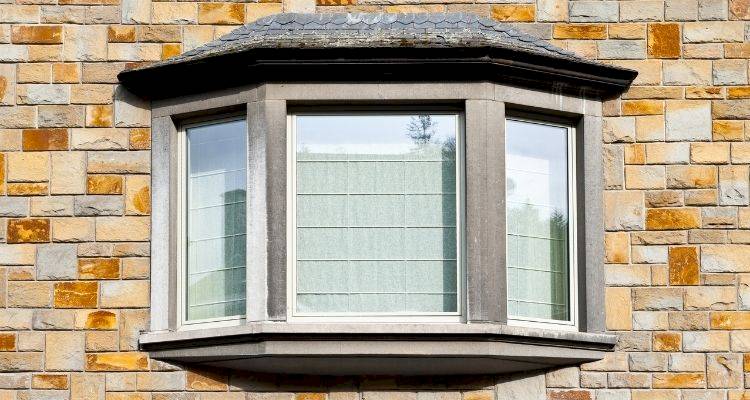
A bay window is any window that projects outward from the main wall, creating a small alcove of additional space inside the room. They're common in Victorian and Edwardian properties, as well as many 1930s homes across the UK.
The 3 main frame materials are uPVC, timber, and aluminium. uPVC is the most popular choice due to its low cost and low maintenance requirements. Timber and aluminium are both pricier but offer different aesthetic and performance benefits, which we cover in more detail below.
Bay Window Installation Prices
The table below breaks down typical bay window replacement costs by type and material, including labour. Prices assume a standard ground floor installation with double glazing.
| Type | Duration | Total Cost |
|---|---|---|
| 3 panel (white uPVC) | 1–2 days | £1,220 |
| 4 panel (white uPVC) | 2 days | £1,750 |
| 5 panel (white uPVC) | 2–3 days | £2,350 |
| Small 6 panel (uPVC) | 2 days | £2,550 |
| Large 5 window (uPVC) | 2–3 days | £2,950 |
| 3 panel (timber) | 2 days | £2,150 |
| 4 panel (timber) | 2–3 days | £2,550 |
| 5 panel (timber) | 2–3 days | £2,950 |
| 3 panel (aluminium) | 2 days | £2,150 |
| 4 panel (aluminium) | 2–3 days | £2,550 |
| 5 panel (aluminium) | 2–3 days | £2,950 |
Want a custom price?
Post your job
1930s Bay Window Replacement Cost
Replacing a bay window in a 1930s property typically costs between £1,500 and £3,500. Many 1930s homes feature larger, non-standard bay openings with original timber frames, which can add to both material and labour costs.
If the existing frame has rotted or the surrounding brickwork is damaged, additional repair work may be needed before the new window can be fitted. It's worth getting a surveyor or experienced installer to assess the opening before committing to a price.
In most cases, replacing an existing bay window in a 1930s home falls under permitted development and won't require planning permission. However, if the property is listed or in a conservation area, you'll need to check with your local planning authority first.
Bow Window Cost
Bow windows follow a similar pricing structure to standard bay windows but typically cost more due to their curved design and longer installation time. As a general guide, expect to pay the following for a uPVC bow window installation:
| Type | Duration | Total Cost |
|---|---|---|
| 3 section (white uPVC) | 1–2 days | £1,250–£1,500 |
| 4 section (white uPVC) | 2 days | £1,650–£2,000 |
| 5 section (white uPVC) | 2–3 days | £2,100–£2,500 |
Want a custom price?
Post your job
Timber and aluminium bow windows will cost significantly more than uPVC. The curved structure also means installation is more complex than a standard bay window replacement, so it's worth getting several quotes before committing to a price.
Supply Cost of Bay Windows
Material choice has a significant impact on the overall cost of a bay window replacement. The table below shows typical material-only costs, excluding labour fees.
| Material Type | Material Cost |
|---|---|
| White uPVC | £800–£1,600 |
| uPVC | £2,000–£2,200 |
| Timber | £1,600–£2,200 |
| Aluminium | £1,600–£2,200 |
Want a custom price?
Post your job
Timber and aluminium are similar in price but differ significantly in performance. Timber degrades over time and is affected by moisture and weather, requiring more maintenance and joint work to keep it stable. Aluminium is lightweight, low maintenance, and allows for a wider range of designs, making it a more practical choice for most installations.
uPVC remains the most popular material due to its value for money. White uPVC is the cheapest option, while coloured or wood-effect uPVC finishes cost more. The number of panels and overall size of the bay will also affect the final material cost.
Additional Bay Window Replacement Costs
On top of the window installation itself, there are several additional costs to factor into your budget. Some are essential to complete the job, while others are down to personal preference.
| Additional Item | What It Covers | Typical Extra Cost |
|---|---|---|
| Scaffolding or access tower | Safe access for fitters when the bay is on an upper floor or tricky frontage. | £200–£450 |
| Render or brickwork repair | Patching cracked render or damaged brickwork around the new bay. | £150–£400 |
| Internal plastering and making good | Skimming the reveals, ceiling, and surrounding wall so everything looks neat again. | £120–£300 |
| Painting and decorating | Repainting the bay area inside once plaster has dried, including any new trims. | £120–£250 |
| Triple glazing upgrade | Swapping from standard double glazing to triple glazed units for extra warmth and soundproofing. | £300–£700 per bay |
| Built-in window seat or board | Adding a made-to-measure seat or deep window board to make use of the bay space. | £200–£600 |
Want a custom price?
Post your job
Double Glazing vs Triple Glazing Costs for Bay Windows
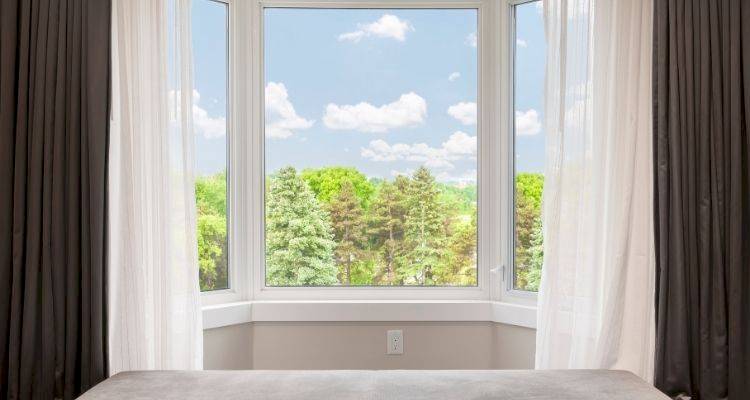
Most bay window installations come with double glazing as standard. A uPVC bay window with double glazing typically costs between £1,800 and £3,000 installed, depending on the number of panels and size of the opening.
Upgrading to triple glazing adds £300 to £700 to the overall cost but offers improved heat retention and better soundproofing. Triple glazed windows cost roughly 33% to 50% more than an equivalent double glazed unit, so the upgrade is worth considering if the bay faces a busy road or if energy efficiency is a priority.
For a full breakdown of glazing costs, see our guides to double glazed window costs and triple glazed window costs.
Labour Cost of Bay Window Replacement
Most contractors charge around £250 to £275 per day for bay window installation, with the job typically requiring 2 to 3 people. For a standard replacement taking 2 to 3 days, expect to pay £500 to £825 in labour fees alone.
Before work starts, confirm with your contractor exactly what's included in the price — materials, labour, and waste removal. Bay window installations generate a significant amount of rubble and old framing, so a skip will be needed. Check whether this is included in the quote or if you'll need to arrange it separately.
Some stages of the job will progress more slowly than others. Accurate levelling and alignment are critical to a successful installation, and rushing these steps can result in draughts, leaks, or frames that don't sit correctly once complete.
Ask a Trade
Got a question that only a tradesperson can answer? We have thousands of trades ready to answer any question you may have.
Ask your question

Factors That Impact Bay Window Replacement Costs
A number of factors will affect the final cost of a bay window replacement, including:
- Location of the property – Labour costs are usually higher in areas such as London, due to increased living expenses.
- Style of the bay window – More intricate or custom designs usually come with a higher price tag.
- Material used – Modern materials (for example aluminium) cost more than a standard uPVC design.
- Size of the bay window – Larger areas or a complete refit will increase the overall cost.
- Complexity – Difficult or more technical installations may require longer to complete or the hiring of specialist tradesmen.
- Ease of access – Limited access around the property can slow down the job, and in turn increasing labour fees to complete.
- Obstructing walls – The removal of walls or other obstacles may require demolition and will add to the labour costs.
What's Involved in Replacing a Bay Window?
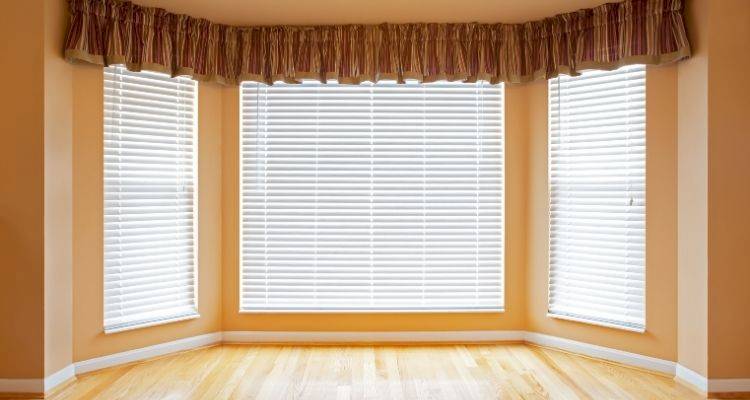
Bay windows look beautiful once they're in. However, getting one swapped out is a pretty big job. They're weighty, awkward to handle, and everything relies on the measurements being accurate.
If they're even a little off, you can end up with leaks, draughts, or a frame that never sits quite right. So, it's best to leave this one to a pro. They do it all the time and know how to get the window in without damaging the brickwork, not to mention the room around it.
Thinking about replacing yours? With MyJobQuote, you can get free quotes from local window installers who fit bay windows day in, day out. Once you've chosen someone, here's the general process they'll follow:
Before the Job Starts
- Measuring and planning — The fitter measures the opening. Next, they check how the current bay is supported and will then talk you through the style and layout you’re looking for.
- Ordering and booking in — When you’ve agreed on a plan, your installer will order the new bay to size. Any support work is sorted, then the fitting date is booked.
During the Job
- Getting the old bay out — Your window installer will carefully take out the old frame, glass and trims. This means the brickwork and plaster stay undamaged.
- Fitting the new frames — They’ll pop the new frame in. Then, they’ll level and fix back to the wall. Lastly, they’ll install the glass then seal it correctly.
After the Job
- Insulation and repairs — If there are any gaps, they’ll be insulated and sealed. And so that everything blends in, your local specialist will replace or repair any damaged plaster, sills or skirting.
- Final checks — Your fitter checks the openers and locks. Then, they’ll add any last bits of sealant, and leave the area clean and ready for you to decorate.
Can I install a upvc bay window by myself? What tools and equipment should I get before performing this installation, if it’s safe to do so. How would I be able to know that it’s safe?
"No unless you have the necessary experience and skill. Best to get it done professionally"
Building Regulations and Planning Permission for Bay Window Replacements
If you’re installing a brand new bay window in place of flat windows at the front of your home, you’ll usually need planning permission because it’s treated as an extension. If you’re replacing an existing bay window, or adding one at the back or side, it will often fall under permitted development – but it’s still worth checking the rules with your local planning department before you go ahead.
You can apply for planning permission online on the gov.uk website. In most cases, planning permission is approved or denied within 8 weeks, and in the case of a rejection, you can appeal the decision and provide the evidence that would support whichever grounds they have rejected the request on. It costs £206 to apply for planning permission on an extension.
Choosing a Bay Window
Bay windows come in several styles, each offering a different look and varying levels of internal space. The style you choose will affect both the overall cost and the complexity of the installation.
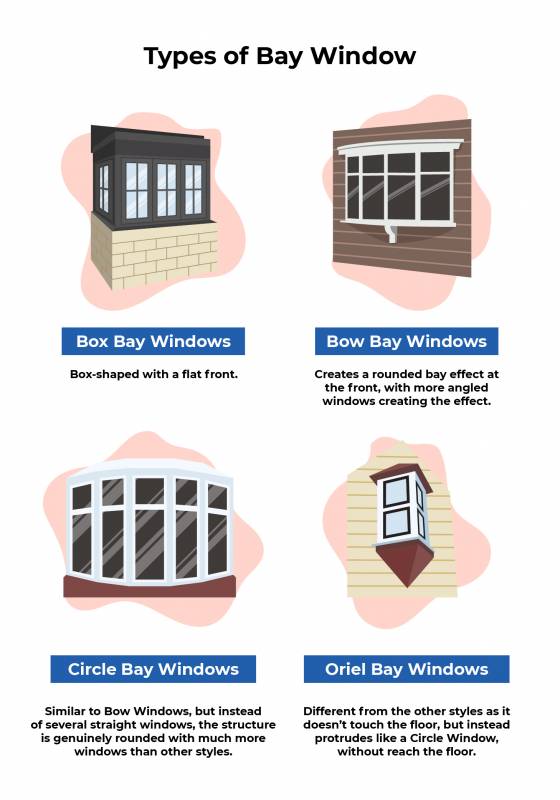
Box Bay Window
Box bay windows feature an outward window at a 90-degree angle on each side, connected with a large window at the front. They're a popular choice for displaying ornaments and plants on the windowsill, and allow plenty of natural light through the large front-facing window.
Pros
- ✔ Allows plenty of natural light through a large front-facing window
- ✔ Versatile in terms of height and depth
Cons
- ✖ Doesn't allow for much more internal space
Bow Window
The bow window creates a rounded extension to the front of your home, typically floor to ceiling, allowing for more internal space. Bow windows are usually made up of 4 to 5 panels and tend to let in more light than other bay window types.
Pros
- ✔ More internal space for things like tables and sofas
- ✔ Possible to convert the front bedroom with a bay window to match the living room below
Cons
- ✖ More costly than some other bay windows
- ✖ Requires much longer construction time
Circle Bay Window
The circle bay window is similar to the bow window but features a smoother, more gradual curve at the front. It's most commonly found in high-end period renovations and custom builds.
Pros
- ✔ Gradual rounded shape for a distinctive exterior
- ✔ Like the bow window, it's possible to convert the room above to match the design
Cons
- ✖ More expensive than most other bay window types
- ✖ Requires longer construction time
Oriel Window
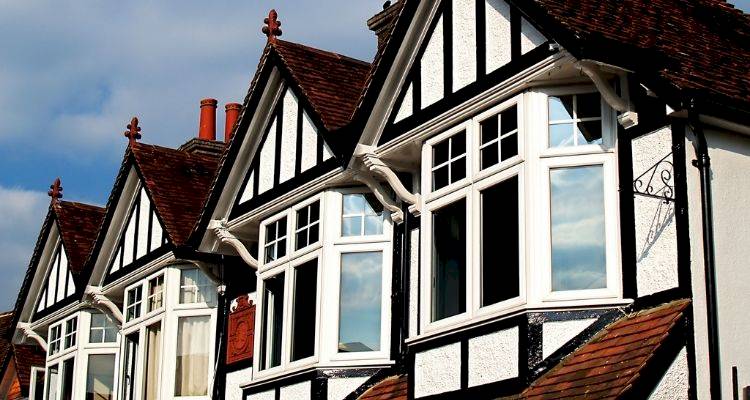
Oriel windows are elegant and traditional in appearance, often seen on older houses, churches, and historic buildings. Unlike other bay window types, an oriel window projects from an upper floor rather than the ground floor, supported by brackets or corbels.
Pros
- ✔ Extends out quite far, really amplifying the extension
- ✔ Looks very elegant and luxurious
Cons
- ✖ Quite a large job due to the size of the extension
- ✖ If there isn't anything to look at from your window, you'd be far better suited with another style
Choosing the Number of Panels
The number of panels in a bay window affects both the cost and the amount of light let in. Fewer panels mean a lower cost and more light, but create a more box-like appearance. More panels create a smoother, more rounded look but reduce the amount of natural light slightly and increase the overall price.
Bay Window Materials
The material you choose for your bay window will affect both the upfront cost and the level of maintenance required over time. The 3 main options are uPVC, aluminium, and timber.
uPVC Bay Windows
uPVC is a popular material for bay windows due to its sturdiness, low maintenance, and low cost. However, some people find that uPVC can look cheaply made. The plastic feel and shiny look suits many, but if it's not for you, consider aluminium as an alternative.
Aluminium Bay Windows
Aluminium has become an increasingly popular choice for bay windows. While it is more expensive than uPVC, it offers a higher-end aesthetic and allows for a far greater range of designs. If you can fit it into your budget, aluminium is a practical and attractive option for bay window installations.
Timber Bay Windows
Timber costs a similar amount to aluminium but requires significantly more maintenance. It can be affected by moisture and weather over time, and its weight adds extra strain on the surrounding structure. That said, if you prefer a traditional aesthetic and have the budget for it, timber is still a viable option.
Benefits of Replacing a Bay Window
Replacing a bay window can bring several practical benefits to your home, including:
- More natural light — The size and angles of a bay window allow more daylight into the room, which can improve the overall feel of the space.
- Increased property value — Extensions and improvements to the exterior of your home can increase its value and kerb appeal for future resale.
- More usable space — The extra space created by a bay window can be used for seating, a work desk, or decorative displays, making the room feel less cramped.
Bay Window Removal Cost
If you need a bay window removed, it's advisable to use a professional rather than attempting the work yourself. Bay windows are extremely heavy, and incorrect removal can cause significant damage to the surrounding brickwork and plaster.
If you wanted to pay someone to remove a bay window, it's likely to cost around £150 for half a day's labour. This won't include waste removal, so consider hiring a skip or asking your contractor to take it to a recycling centre.
Checklist: Choosing a Bay Window Installer
Consider these key points before hiring a contractor for a bay window replacement:
- Are they FENSA or CERTASS registered? It means they can sign off the window work and hand you the right paperwork.
- Will they sort building control? A new bay often needs sign-off, so check if they take care of it or if you'll need to submit it yourself.
- Do they have public liability insurance? If anything gets broken, you want their insurance covering it, not yours.
- Is the repair work included? Find out if plastering, trims, and sealing are part of the job before agreeing to a price.
- Is waste removal sorted, too? Old frames, broken glass, and rubble build up fast. Make sure clear-up is in the quote.
- Have they fitted bay windows before? It's a different skill to switching over a standard window. Be sure they've done cut-ins or replacements like yours.
- What about recent work? A few photos of similar bays (before and after) give you a good feel for their finish.
FAQs
Can I Change a Bay Window Myself?
It's not recommended. Bay windows are heavy and awkward to handle, and the job relies on accurate measuring and support. If anything is slightly off, you can end up with draughts, leaks, or a frame that pulls away from the wall over time. It's best to hire an experienced bay window installer.
Can I Keep the Existing Bay Roof When I Replace the Windows?
Sometimes. If the bay roof is solid, watertight, and properly supported, your installer may be happy to keep it and just replace the frames underneath. If there are signs of rot, sagging, or leaks, they'll likely advise replacing it at the same time. Ask them to check during the survey so any extra work is priced in from the start.
Will I Need To Move the Radiator or Sockets Under My Bay Window?
Not always. In most cases, a radiator under the window can stay in place while the new bay goes in. If you're adding a deeper window seat or the pipes are in the way of the new frame, a plumber or electrician may need to make adjustments. Mention any radiators, sockets, or TV points at the quoting stage so your installer can allow for that work.
Do I Need Planning Permission to Replace a Bay Window?
If you're replacing an existing bay window like for like, you won't usually need planning permission. If you're installing a new bay window in place of flat windows at the front of your home, it's treated as an extension and planning permission will likely be required. Always check with your local planning authority before starting work.
How Much Does It Cost to Replace a 1930s Bay Window?
Replacing a bay window in a 1930s property typically costs between £1,500 and £3,500. Many 1930s homes feature larger, non-standard bay openings with original timber frames, which can add to both material and labour costs. It's worth getting an experienced installer to assess the opening before committing to a price.
Is Triple Glazing Worth It for a Bay Window?
Triple glazing can add £300 to £700 to the cost of a bay window installation but offers better heat retention and soundproofing than standard double glazing. It may be worth considering if the bay faces a busy road or if energy efficiency is a priority.
What's the Easiest Way To Keep Bay Window Costs Down?
Stick with white uPVC and keep the same basic layout to avoid structural changes. Reuse the existing opening where possible rather than changing the structure, and get at least 3 quotes from local installers to compare prices.